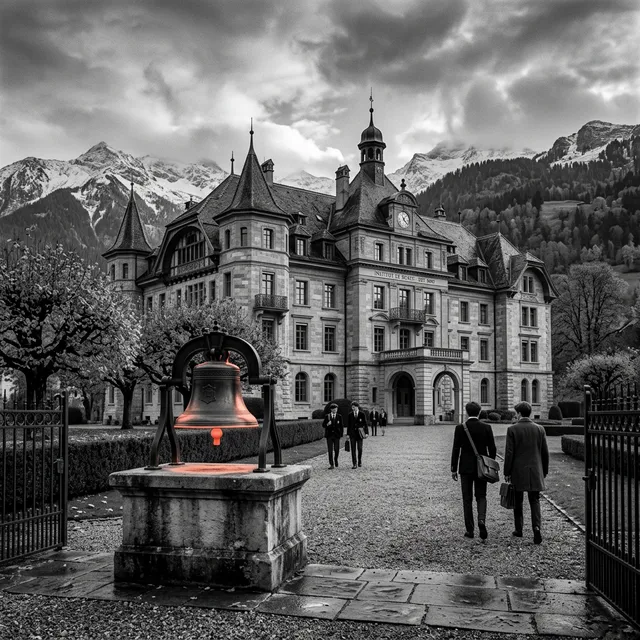
For expat families relocating to Switzerland, choosing the right school is often the decision that shapes the entire experience. The wrong choice can leave children struggling with language barriers, curriculum gaps, or social isolation. The right choice provides academic continuity, a supportive international community, and a launchpad for the next move — whether that’s another country or university. Switzerland hosts over 100 international schools, more per capita than almost any country on earth, and the options can be overwhelming. This guide cuts through the complexity with concrete data for 2026.
Why International Schools: When They Make Sense
International schools are not automatically the right choice for every expat family. They make the strongest case when:
- Your assignment is short-term (1-4 years) and curriculum continuity matters for university applications
- Your children are older (12+) and would struggle to learn a new language fast enough to keep up academically in public school
- You want an English-language education that follows a globally recognized curriculum
- Your child has specific learning needs that require specialized support available at international schools
- Your company provides an education allowance that covers most or all of the tuition
For families planning a long-term or permanent stay, the Swiss public school system — free, high-quality, and deeply integrating — deserves serious consideration, particularly for younger children.
Curricula Available in Switzerland
| Curriculum | Exam System | Age Range | University Recognition | Key Strength |
|---|---|---|---|---|
| International Baccalaureate (IB) | IB Diploma (ages 16-18) | 3–18 | 150+ countries, all Swiss universities | Global mobility, critical thinking focus |
| British | IGCSEs + A-Levels | 3–18 | UK, EU, Switzerland, worldwide | Structured, subject depth, strong for UK universities |
| American | AP exams, High School Diploma | 3–18 | US, Canada, worldwide | Breadth of subjects, extracurricular emphasis |
| French | Baccalauréat | 3–18 | France, EU, Switzerland | Strong in Romandie, rigorous academic tradition |
| Swiss Matura | Maturitätsprüfung | 4–18 | Switzerland (guaranteed uni entry), EU | Direct access to Swiss universities without additional exams |
| Bilingual programs | Varies | 3–18 | Depends on program | Dual-language immersion, cultural integration |
The IB is the most common curriculum at Swiss international schools and offers the greatest flexibility for globally mobile families. The IB Diploma Programme (ages 16-18) is particularly well-regarded by universities worldwide. British curriculum schools are strong in Zurich and Geneva, while French curriculum options naturally dominate in Romandie.
Top Schools by Region
Zurich Region
| School | Location | Curriculum | Annual Fees (Day) | Boarding |
|---|---|---|---|---|
| Zurich International School (ZIS) | Kilchberg & Adliswil | IB | CHF 32,000–42,000 | No |
| Inter-Community School Zurich (ICSZ) | Zumikon | IB | CHF 28,000–38,000 | No |
| SIS Swiss International School | Zurich-Wollishofen | Bilingual (DE/EN) + Swiss Matura/IB | CHF 22,000–30,000 | No |
| Zurich Academy | Zurich | British | CHF 25,000–35,000 | No |
| Hull’s School | Zurich | Swiss + bilingual | CHF 18,000–25,000 | No |
ZIS is the flagship international school of the Zurich region with two campuses, a strong IB programme, and extensive university counseling. It consistently places graduates at top universities in the US, UK, and Europe. Inter-Community School in Zumikon offers a slightly smaller community feel and is popular with families on the Gold Coast. SIS stands out with its genuinely bilingual German-English model, which suits families planning to stay long-term and wanting Swiss integration alongside international education. For more on relocating to the Zurich area, see our Moving to Zurich guide.
Geneva Region
| School | Location | Curriculum | Annual Fees (Day) | Boarding |
|---|---|---|---|---|
| International School of Geneva (Ecolint) | 3 campuses across Geneva | IB | CHF 28,000–38,000 | No |
| Institut Florimont | Grand-Lancy | French Bac + IB | CHF 18,000–28,000 | No |
| Collège du Léman | Versoix | IB, French, American | CHF 28,000–36,000 | CHF 75,000–95,000 |
| Geneva English School | Genthod | British | CHF 22,000–30,000 | No |
Ecolint (founded 1924) is the world’s oldest international school and operates three distinct campuses: La Grande Boissière, La Châtaigneraie, and the Campus des Nations. Each campus has its own character and community. Demand consistently exceeds supply, and waitlists for entry at age 4-5 can stretch over a year. Collège du Léman is one of the few Geneva schools offering boarding alongside day programs, making it attractive for families who want that option. For more on family life in Geneva, see our Moving to Geneva guide.
Basel Region
| School | Location | Curriculum | Annual Fees (Day) | Boarding |
|---|---|---|---|---|
| International School Basel (ISB) | Reinach | IB | CHF 26,000–36,000 | No |
| Academia International School | Basel | Swiss + IB | CHF 20,000–28,000 | No |
ISB is Basel’s primary international school, serving the large pharmaceutical and chemical industry expat community (Roche, Novartis, Syngenta). The school has a strong science program and benefits from industry partnerships. The relatively concentrated expat community in Basel means ISB functions as a hub for international families.
Lausanne / Vaud Region
| School | Location | Curriculum | Annual Fees (Day) | Boarding |
|---|---|---|---|---|
| International School of Lausanne (ISL) | Le Mont-sur-Lausanne | IB | CHF 30,000–40,000 | No |
| Institut Le Rosey | Rolle / Gstaad | IB, French Bac | — | CHF 105,000–130,000 |
| Haut-Lac International School | St-Légier | IB, French Bac | CHF 22,000–32,000 | CHF 60,000–75,000 |
| La Côte International School | Aubonne | IB | CHF 20,000–30,000 | No |
ISL is the leading day school in the Lausanne area with a strong IB program and modern campus. Le Rosey is Switzerland’s most famous (and most expensive) boarding school, splitting its academic year between a lakeside campus in Rolle and a winter campus in Gstaad. It is in a category of its own and primarily serves ultra-high-net-worth families from around the world.
Zug / Central Switzerland
| School | Location | Curriculum | Annual Fees (Day) | Boarding |
|---|---|---|---|---|
| International School of Zug and Lucerne (ISZL) | Baar / Hünenberg | IB | CHF 28,000–38,000 | No |
| SIS Swiss International School | Rotkreuz | Bilingual (DE/EN) | CHF 22,000–28,000 | No |
ISZL serves the rapidly growing international community in Zug, driven by the concentration of commodity trading firms, tech companies, and crypto/blockchain businesses. The school operates two campuses and has invested heavily in STEM facilities and performing arts. Waitlists are common for popular year groups. For more on relocating to this low-tax canton, see our Moving to Zug guide.
Understanding the Costs
International school education in Switzerland represents a significant financial commitment. Beyond tuition, families should budget for:
- Registration and enrollment fees: CHF 1,000–5,000 (one-time)
- Capital levy or building fund: CHF 2,000–10,000 (one-time at some schools)
- Lunch program: CHF 1,500–3,000 per year
- School bus transport: CHF 2,000–5,000 per year
- Uniforms: CHF 300–800 per year (at schools that require them)
- Extracurricular activities: CHF 500–3,000 per year
- School trips and excursions: CHF 500–2,000 per year
- Technology fees: CHF 500–1,500 per year (laptop programs)
For a family with two children at a mid-range international school, the total annual cost including all extras typically falls between CHF 65,000 and CHF 100,000. This is why employer education allowances are such a critical component of expat compensation packages.
Ready to compare agencies?
Need help finding the right school? Compare agencies offering education and school search services.
Compare Verified Agencies →Application Timeline
International schools in Switzerland operate on a rolling admissions basis, but places fill quickly for popular year groups. The following timeline applies to September entry:
- 18+ months before: Research schools, attend virtual open days, shortlist 2-3 options
- 12-15 months before: Submit applications, pay registration fees, provide school records and references
- 9-12 months before: Attend admission assessments (often online for overseas applicants), interviews
- 6-9 months before: Receive offers, accept and pay deposit to secure the place
- 3-6 months before: Complete enrollment paperwork, medical forms, uniform orders
- 1 month before: Attend new family orientation events
Key insight: The most competitive entry points are Early Years / Reception (age 4-5) and Year 7 / Grade 6 (age 11-12, the start of secondary school). If your child’s age falls at these entry points, apply as early as possible. Mid-primary and mid-secondary entries are generally easier to secure.
The Public School Alternative
Switzerland’s public schools are free, well-funded, and academically strong. The Swiss education system consistently ranks among the top in international assessments. For families considering public school, here is what to expect:
Advantages
- No tuition fees — funded through taxes
- Deep integration — children learn the local language and culture immersively
- High quality — small class sizes, well-trained teachers, strong outcomes
- Social integration — children build friendships across the local community, not just the expat bubble
- Long-term benefit — fluency in German or French opens doors in the Swiss job market
Challenges
- Language of instruction is German (or Swiss German), French, or Italian depending on the region
- Curriculum differences from international systems may create gaps
- Integration classes (Aufnahmeklassen / classes d’accueil) are available but vary by canton
- Less flexibility — public schools follow the cantonal curriculum strictly
When Public School Works Best
- Children are under age 8-10 and can acquire a new language naturally
- The family plans to stay in Switzerland long-term (5+ years)
- Parents want their children to integrate into Swiss society
- The employer education allowance is not available or limited
Many expat families adopt a hybrid approach: younger children enter public school for language immersion and integration, while older teenagers attend international school to maintain curriculum continuity for university applications.
Making the Decision: Key Factors
When choosing between schools, consider these factors in order of importance:
- Length of stay: Short-term assignments favor international schools; long-term stays favor public schools or bilingual programs
- Age of children: Younger children adapt faster to new languages and systems; teenagers need more continuity
- Language goals: Do you want your children to learn German/French fluently, or maintain English-medium education?
- University destination: IB and A-Levels are best for UK/US/global universities; Swiss Matura guarantees Swiss university entry
- Employer support: An education allowance that covers CHF 30,000-40,000 per child changes the calculus entirely
- Sibling considerations: Keeping children in the same school simplifies logistics and builds family community
- Special needs: International schools generally offer more individualized support, including learning support departments and English as an Additional Language (EAL) programs
Practical Tips for Expat Parents
- Visit in person before committing. Every school has a distinct culture that you can only feel by walking the hallways and talking to current parents.
- Join the parent community on social media (Facebook groups, WhatsApp) for your shortlisted schools. Current parents are the best source of unfiltered information.
- Negotiate education allowances as part of your relocation package before signing your employment contract. Adding school fees later is much harder. For details on what corporate packages typically include, see our Corporate Relocation to Switzerland guide.
- Consider the commute. Some international schools are located outside city centers. A 45-minute school bus ride each way affects your child’s daily life significantly.
- Plan for transitions. If you know you will leave Switzerland in 3-4 years, choose a curriculum that aligns with your likely next destination.
The right school decision gives your children stability, confidence, and opportunity during what can otherwise be a disorienting transition. Take the time to research thoroughly, visit your options, and involve your children in the process.
Find Your Relocation Expert
Compare verified Swiss relocation agencies. See real reviews, transparent pricing, and get matched in 24 hours.
Browse All Agencies →